How to Build a Membership Site That Earns Recurring Revenue
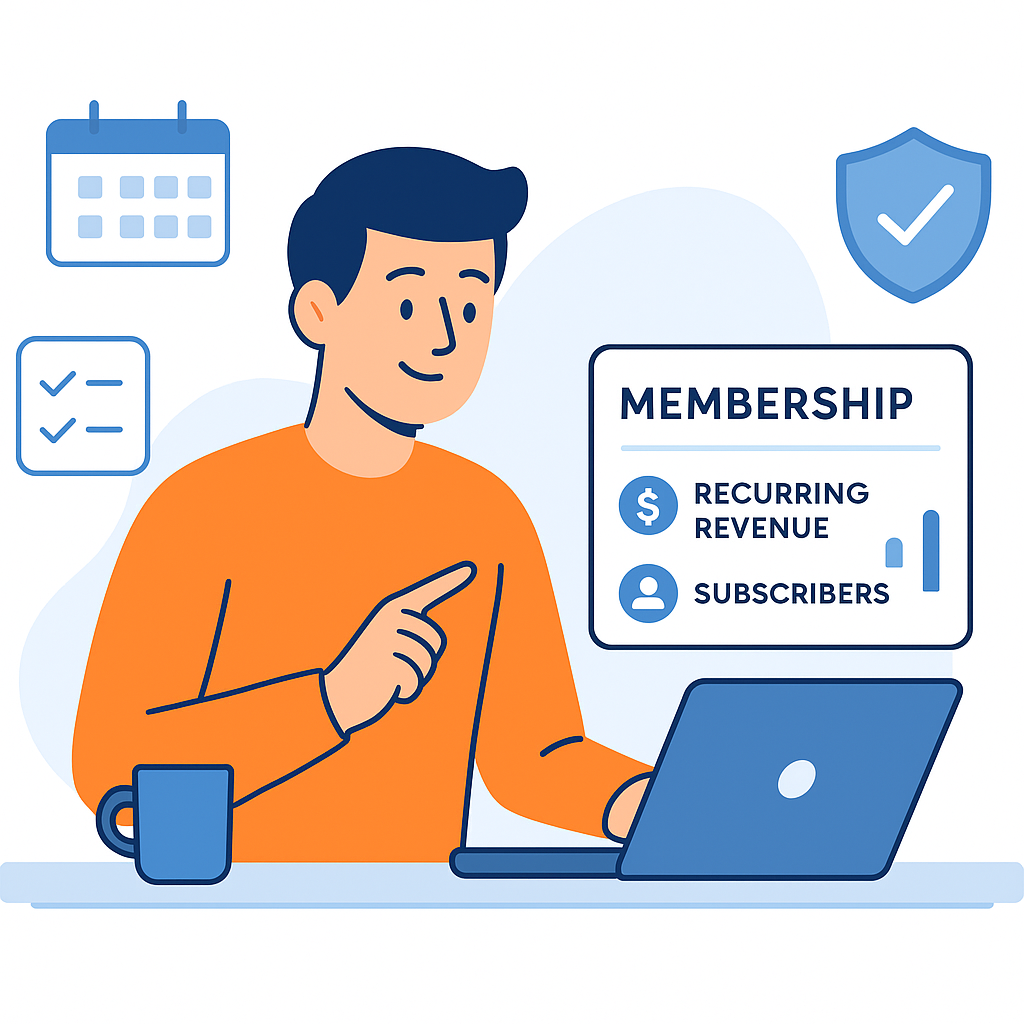
A membership site sells ongoing access. Members pay monthly or annually for courses, coaching, tools, or community, and the business earns recurring revenue only while the offer continues to solve a real problem. Retention pays the bills.
A membership can smooth out the launch-to-launch cash-flow roller coaster that comes with selling only one-time courses. That benefit is real, but it is not magic: recurring billing does not guarantee recurring value, and members can cancel when the offer stops helping them. The business still needs customer service, fresh direction, clear pricing, and a reason for people to remain enrolled.
Most membership projects do not stall because the creator lacks another video lesson. They stall because the offer is vague, the first month feels empty, or the owner spends weeks adjusting plugins before asking prospective members what they need. Frankly, a small, well-run membership beats a sprawling content library that nobody can use.
This guide explains how to build a membership site, choose a business model, set up tiers, prepare an initial content runway, and invite the right first members. It also covers common mistakes and the numbers worth watching. The goal is a durable digital business, not a glossy sales page with a leaky billing system.
What Is a Membership Site?
A membership site is a website or platform where people pay for continued access to defined benefits. Those benefits might include a course library, monthly workshops, coaching calls, downloadable templates, expert feedback, or a private member space. The defining feature is not the software. It is the ongoing exchange: members keep paying because the service continues to be useful.
A membership is a business model, not simply a payment setting. A creator can put a paywall around existing material and call it a membership, but that alone does not make the offer worth renewing. Members need a clear result, an easy way to get started, and a reason the service remains relevant after their first visit. If a library solves a one-time problem and never changes, a one-time course may fit better.
This distinction matters for anyone looking for passive income. Subscription payments can become more predictable than repeated launches, but membership operations are rarely passive at the start. Someone has to answer questions, fix access problems, review cancellations, and decide what to publish next. Automation can handle routine billing and permissions; it cannot replace sound judgment or useful work.
A good membership usually focuses on a repeat need. A personal finance group might help members review budgets each month, while a professional community could offer regular practice sessions and feedback. A course library may serve as the foundation, with monthly live sessions or updated resources giving people a reason to stay. The product should match the cadence of the problem rather than inventing busywork to justify a subscription.
Before choosing software, test the idea with real people. Ask what they have already tried, what keeps getting in the way, and what kind of help they would pay to receive repeatedly. The U.S. Small Business Administration recommends market research and competitive analysis as tools for understanding demand and customers; its market research guide is a useful starting point. I look for evidence of a repeated need, not applause for a clever name.
Core Benefits and Why They Matter
Recurring revenue is the headline benefit. A one-time course sale pays once, while a membership can generate a new payment each billing period from each active member. That creates a base to plan around, though the total changes with cancellations, failed payments, refunds, discounts, and new sign-ups. Treat monthly recurring revenue as a useful operating measure, not money already guaranteed in the bank.
A simple example makes the difference plain. One hundred and fifty active members paying $40 per month produce $6,000 in gross monthly recurring revenue before fees, taxes, refunds, and other costs. That is arithmetic, not a promise. A business with fewer members and stronger retention may be healthier than a bigger list that cancels rapidly.
Here are the practical advantages:
- A steadier revenue base. Subscription income can reduce dependence on a few launch weeks. You still need acquisition, but you are not starting from zero each time you promote an offer.
- More customer insight. Member questions, attendance, downloads, and cancellations show where people get stuck. Use those signals to improve the service rather than guessing which new course to create.
- Multiple revenue streams. A membership may sit alongside standalone courses, coaching, workshops, or digital downloads. The pieces should complement one another; piling unrelated offers together confuses buyers.
- Better potential for scalability. Recorded lessons and self-serve resources can help more people without requiring a matching increase in live hours. Coaching and community still take labor, so price and capacity must reflect the work involved.
- A clearer path to measure ROI. Compare the cost of acquiring and serving a member with the revenue and retention that member produces over time. A high subscription price is not a win if support costs consume the margin.
The catch is that recurring billing gives customers recurring choices. A weak month can bring cancellations, and a poor onboarding experience can make a strong offer look worse than it is. Keep the member's time in mind: clear navigation, a short first task, and a dependable release calendar often matter more than a giant archive.
Memberships can also support a more responsible business when the offer is honest and the billing is fair. Make the price, renewal timing, and cancellation method plain before checkout. A sustainable model respects the dignity of the customer's work and money; dark patterns may delay a cancellation, but they corrode trust and invite trouble.
Step-by-Step: How to Build a Membership Site
1. Define the member and the problem
Start with a person and a problem, not a pile of content. I teach personal finance is a topic; I help salaried adults in their thirties pay down student debt while building an emergency fund is a clearer offer. The second description identifies a group, a practical aim, and a challenge that may need support over several months.
Write one sentence that completes this thought: This membership helps [specific audience] make progress on [specific recurring problem] by providing [specific kind of support]. Then ask prospective members whether the problem is urgent, what they currently do about it, and what they would expect to receive. The SBA market research guidance offers a sensible framework for checking customer demand and alternatives.
Do not mistake compliments for demand. Ask for a small paid pilot, a deposit, or a clear commitment to a founding offer. A polite yes costs nothing; a payment is stronger evidence. If people want a one-time outcome, sell a one-time product instead of forcing a subscription onto the problem.
2. Choose a business model and a price
Decide what members receive and how often they receive it. Common models include an all-access library, a guided sequence with scheduled releases, a professional community, or a combination of lessons and live support. Pick the lightest format that reliably helps people make progress. More features mean more work to maintain.
Price the offer by weighing member value, delivery costs, support time, payment fees, and alternatives. A low price can make an offer easy to try but may require a large member count to cover the work. A premium tier can support personal attention, but only if the service justifies that price and you can deliver it consistently. Test the model with a small group before treating your first price as permanent.
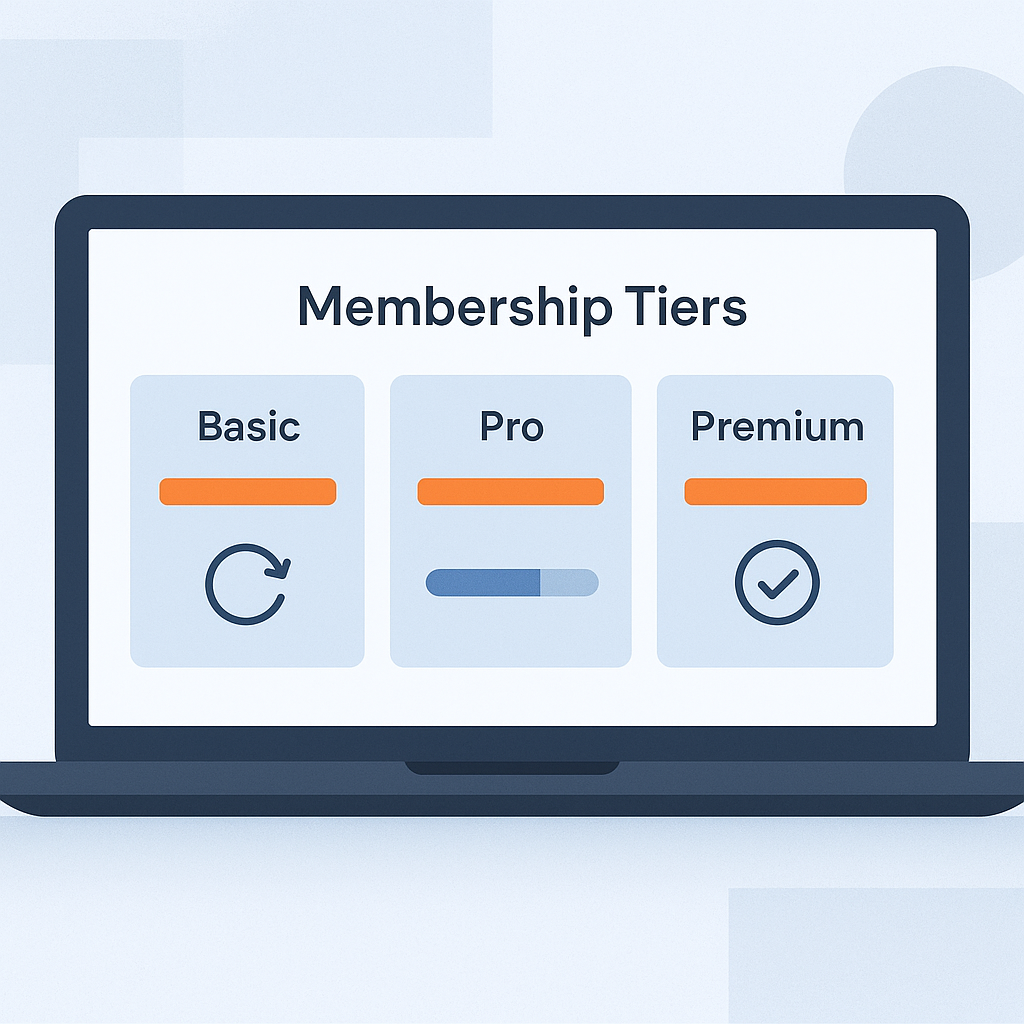
If you use tiers, give each a meaningful difference. For instance, a basic tier might include the course library and monthly workshop, while a higher tier adds a group coaching session. Avoid creating five nearly identical options; choice should clarify value, not make checkout feel like a tax form.
3. Select the platform before building custom technology
Use a platform that can handle recurring billing, member access, tier rules, and customer account changes. Check whether it supports the payment methods your audience uses, how it handles failed payments, what data you can export, and which integrations you actually need. Read its fee schedule and cancellation workflow before committing.
Tax deserves attention early. Some services offer tax calculation or collection features in supported places, but that does not automatically settle every tax responsibility for the business. Requirements vary by location and activity; review official guidance and consult a qualified adviser when needed. The IRS Gig Economy Tax Center explains U.S. tax considerations for income earned through digital and other independent work.
A custom site may make sense later, after the offer has proved itself and the limits of the existing platform are clear. Starting with bespoke code is often an expensive way to postpone customer conversations. Choose dependable infrastructure first, then spend your scarce hours on the member experience.
4. Build tiers, access rules, and billing details
Map each tier to the products it includes: courses, coaching appointments, downloads, or community access. Confirm that an upgrade adds the promised benefits, a downgrade removes only the benefits tied to the higher tier, and cancellation ends future access according to the terms shown to the customer. Test each path with a dummy account before opening the doors.
Write checkout details in plain language. Show the price, billing interval, trial terms if any, renewal date or method, and instructions for managing the account. Make cancellation easy to locate. The Federal Trade Commission's negative option marketing guidance discusses the importance of clear disclosures and consent in recurring-payment offers; review current rules that apply to your business and location.
Run a full purchase test on desktop and phone. Check the receipt, welcome email, password setup, course access, and support contact. A payment that succeeds while the member cannot reach the product is not a successful sale.
5. Prepare the first month before launch
Have three to five useful pieces ready before inviting members. They could be a welcome orientation, a core lesson, a worksheet, a live session recording, and a practical checklist. The point is not to fill a shelf; it is to help a new member get a win during the first visit and understand what happens next.
Build a short onboarding sequence. Explain where to begin, how to ask for help, when the next release arrives, and how members can manage billing. Then give them one small action to take. A new member who knows the next step is less likely to feel lost in a crowded course library.
Set a content calendar around one reliable deliverable each month: a masterclass, a playbook, a workshop, or a live question-and-answer session. Choose a pace you can keep during a busy week. Consistency is a better retention strategy than announcing a weekly content schedule you abandon by month two.
6. Launch to a warm audience and learn quickly
Invite your most engaged subscribers, past customers, or people who have already asked for this kind of help. Offer founding pricing only when you can explain why it is different and whether it will change later. A real capacity limit can be reasonable for a coaching group; a fake countdown timer is not.
Keep the first launch focused. State who the membership is for, the problem it addresses, what is included, what it costs, and what members should expect during their first month. Answer objections plainly. If the offer is not a fit for someone, say so rather than pressuring them into a recurring payment.
Treat early members as a pilot group, not a box to check. Ask where they hesitated, which content they used, and what result they wanted but could not reach. I would rather fix one onboarding snag for twenty paying members than celebrate a large waitlist that never becomes a product people use.
7. Track retention, service quality, and unit economics
Set a baseline from day one. Track active members, new paid members, cancellations, failed payments, refunds, monthly recurring revenue, and engagement with the core offer. For a simple churn rate, divide the number of members who cancel during a period by the number of active members at the start of that period, then state the time period clearly. Keep the definition consistent so comparisons mean something.
Look beyond a single percentage. Ask when people cancel, whether they completed onboarding, what they used before leaving, and whether the reason was price, timing, missing features, or a resolved need. A cancellation is not always a failure; some members may have reached their goal. The job is to learn whether the service kept its promise and whether the next version should change.
Automation can handle receipts, renewal notices, access changes, and routine reminders. It should not make support feel like a locked door. Make it easy to contact a person for a billing issue, and check that automated messages are accurate, timely, and useful. A platform's subscription tools can simplify recurring payment administration; Stripe's subscription documentation describes common billing workflows and lifecycle events.
Membership Site vs. Standalone Course
The main competitor to a membership is often a one-time course, because both can package expertise for digital sale. Neither is universally better. A course fits a bounded learning outcome; a membership fits a need that benefits from continued guidance, new material, or access to a useful community.
| Factor | Membership site | Standalone course |
|---|
| Payment pattern | Recurring monthly or annual charge | Usually a one-time payment |
| Revenue example | 150 members at $40 per month = $6,000 gross MRR | 50 sales in a month creates revenue from those 50 purchases only |
| Best fit | Ongoing needs, regular support, updated resources | Defined outcome that can be taught in a finite program |
| Content duty | Keep delivering a clear reason to renew | Build and maintain the course; new sales require continued marketing |
| Customer commitment | Lower initial cost may be possible, but payments continue | Higher one-time price may be easier to understand |
| Main risk | Churn, support load, and a weak monthly value proposition | Revenue swings and reliance on new buyers or launches |
| Useful measures | Churn, retention, member activity, recurring revenue | Conversion, refunds, completion, and new sales |
The revenue example is a comparison of billing patterns, not a forecast. Membership revenue is gross before processing fees, refunds, taxes, and operating expenses, while course sales depend on price and sales volume. Compare the actual economics of both offers rather than assuming subscriptions are automatically safer.
A combined model can work well. Sell a standalone course for people who want a structured, one-time result, then offer a membership for continuing practice, updated tools, or group support. Make the difference obvious so a buyer does not feel forced to pay for access they do not need. The offer should serve the customer, not just the spreadsheet.
Common Mistakes to Avoid
Building around a topic instead of a painful problem. A broad subject like productivity attracts casual interest but gives a buyer little reason to pay each month. Narrow the promise until a member can recognize their situation and understand what progress looks like. If the description could apply to almost anyone, it probably speaks clearly to no one.
Filling the library before validating demand. Creators often record a mountain of lessons before they have spoken to potential members. That is backwards. Test a small paid version first, deliver the help directly, and learn what people use. Then make reusable content from repeated questions rather than guesses.
Assuming more content means more value. A huge archive can overwhelm new members, especially when nobody tells them where to begin. Organize resources around a first step, a next step, and a practical outcome. A simple monthly release can outperform a daily flood of material that members never finish.
Choosing software by feature count. Every added tool brings settings, costs, and another place where something can break. Pick based on the tasks that matter: reliable checkout, clear access rules, account self-service, customer support, and useful reporting. Confirm how member data can be exported before you build a business around one provider.
Making cancellation hard. Hiding the exit button may reduce cancellations for a moment, but it damages trust and can create compliance risks. Tell customers how billing works before purchase, send clear renewal information, and make account management straightforward. Keep people because the service is useful, not because leaving is a chore.
Promising passive income or guaranteed results. Memberships can provide recurring sales, but customers still need service and the business still needs maintenance. Avoid claims that imply effortless income or certain outcomes. Explain what the product includes, what it does not include, and how much participation may be required.
Ignoring churn until revenue falls. A membership can add new sign-ups while losing existing members at the same time. Watch the cancellation trend and ask why people leave. Contact departing members respectfully, make feedback optional, and use patterns to improve the offer. Do not treat every cancellation as a personal verdict or assume every person wants a discount.
Adding tiers to solve a positioning problem. More price points do not rescue an unclear promise. Start with one core tier or two genuinely different levels, then add choices only when member behavior shows a real need. A sensible business model is easier to operate and easier for a buyer to understand.
Frequently Asked Questions
How much does it cost to build a membership site?
There is no single price. Costs can include the membership platform, payment processing, web hosting, email software, content production, taxes, and customer support. A hosted platform may reduce technical setup but charge subscription or transaction fees; a custom build can add development and maintenance costs. List the must-have expenses first, test the offer with the least complicated setup that works, and compare costs against realistic sales rather than imagined scale.
Can a membership site create passive income?
It can create recurring income, but passive is the wrong expectation for most new memberships. Automation can process billing and grant access, while recorded content can serve members repeatedly. The owner still needs to maintain the product, handle problems, monitor retention, and communicate changes. A mature membership with strong systems may need less day-to-day attention, but it still needs responsible oversight.
How many members do I need to make a profit?
Use a break-even calculation rather than a generic target. Add fixed monthly costs, estimate variable costs per member, and calculate how much remains from each payment after fees, refunds, and service expenses. Divide fixed costs by the remaining contribution per member to estimate a basic break-even count. Then allow for cancellations and uneven sales. The answer depends on price, costs, delivery model, and retention.
What should I publish each month?
Publish something that helps members move forward on the problem they joined to solve. One focused workshop, updated template, expert review, or practical Q&A may be enough. Ask members what they need, check which resources they use, and keep the release schedule predictable. Do not create a new item merely to make the content calendar look busy.
Final Thought
A membership site is not a billing trick. It is a continuing promise to a defined group of people, backed by useful work, straightforward terms, and a service they can rely on. The strongest version may be modest: one audience, one pressing problem, one clear tier, and one helpful release each month. That is a sturdier beginning than a vast course library built on assumptions.
Start with conversations, not software settings. Confirm that people want ongoing help, offer a small paid pilot, and pay close attention to what members actually do. Choose tools that reduce administrative chores without obscuring prices or trapping customers. Then earn renewals by delivering what you said you would deliver.
Recurring revenue is valuable because it can give a small digital business room to plan. It is also a responsibility: customers entrust you with their money and attention, and your choices should honor that trust. Build carefully, measure honestly, and make cancellation as clear as enrollment. A business that treats members fairly has a better chance of lasting than one built on hype.
FAQPage JSON-LD