Making money online is not magic. It is a business model, a stack of revenue streams, and a pile of ordinary work done with discipline. Most people want the...
How to Make Money Online: Passive Income Streams, Side Hustles, and Digital Entrepreneurship That Actually Work
Making money online is not magic. It is a business model, a stack of revenue streams, and a pile of ordinary work done with discipline. Most people want the income first and the skill later. That order is backwards. Real online income comes from solving a problem, packaging the solution, and distributing it well.
Key Takeaways:- Online income works best when it starts with a real problem.
- Passive income is usually semi-passive at the start.
- Side hustles can become digital businesses if you treat them like assets.
- Automation, pricing, and distribution matter more than “hacks.”
- Ethical work, fair dealing, and useful products beat shortcuts over the long run.
What is making money online? It is the process of creating income through digital channels, often using content, software, services, education, affiliate sales, or e-commerce. Here’s the kicker: most “easy money” advice is nonsense. The internet lowers startup costs, yes, but it does not repeal effort, judgment, or the need to serve people well. When I analyzed dozens of online business models, the winners almost always had three things in common: a clear offer, a repeatable acquisition method, and a way to deliver value without being physically present every single time.
That is where digital entrepreneurship differs from random side hustles. A side hustle can be a one-off gig. A digital business is a system. You build a business model with revenue streams, automation, and some degree of scalability. It may begin as freelance writing, tutoring, consulting, selling templates, or affiliate content. But if it works, it evolves into an asset that can keep earning while you sleep, travel, or do other work. Not because it is “passive” in the fairy-tale sense, but because the work has been shifted into assets: content, email lists, products, software, and processes.
Most guides skip the boring truth. They sell fantasy. The real goal is not to find money lying around on the internet. It is to build something people will pay for repeatedly, because it saves time, reduces pain, or produces a result they cannot easily get alone. That fits both business sense and basic moral decency. Stewardship matters. If you have skill, time, and attention, you are meant to use them well, not waste them on junk or fraud.
What counts as passive income?
Passive income is income that does not require you to trade hours for dollars every time. That sounds neat. Is it real? Yes, but with a catch. You usually front-load the labor. You build the asset once, then maintain it. Examples include digital courses, affiliate sites, software subscriptions, ad-supported content, printables, and licensed media. A good source on business models is Shopify’s guide to passive income ideas, and for broader online earning models, Entrepreneur’s overview of online income methods is worth a look.
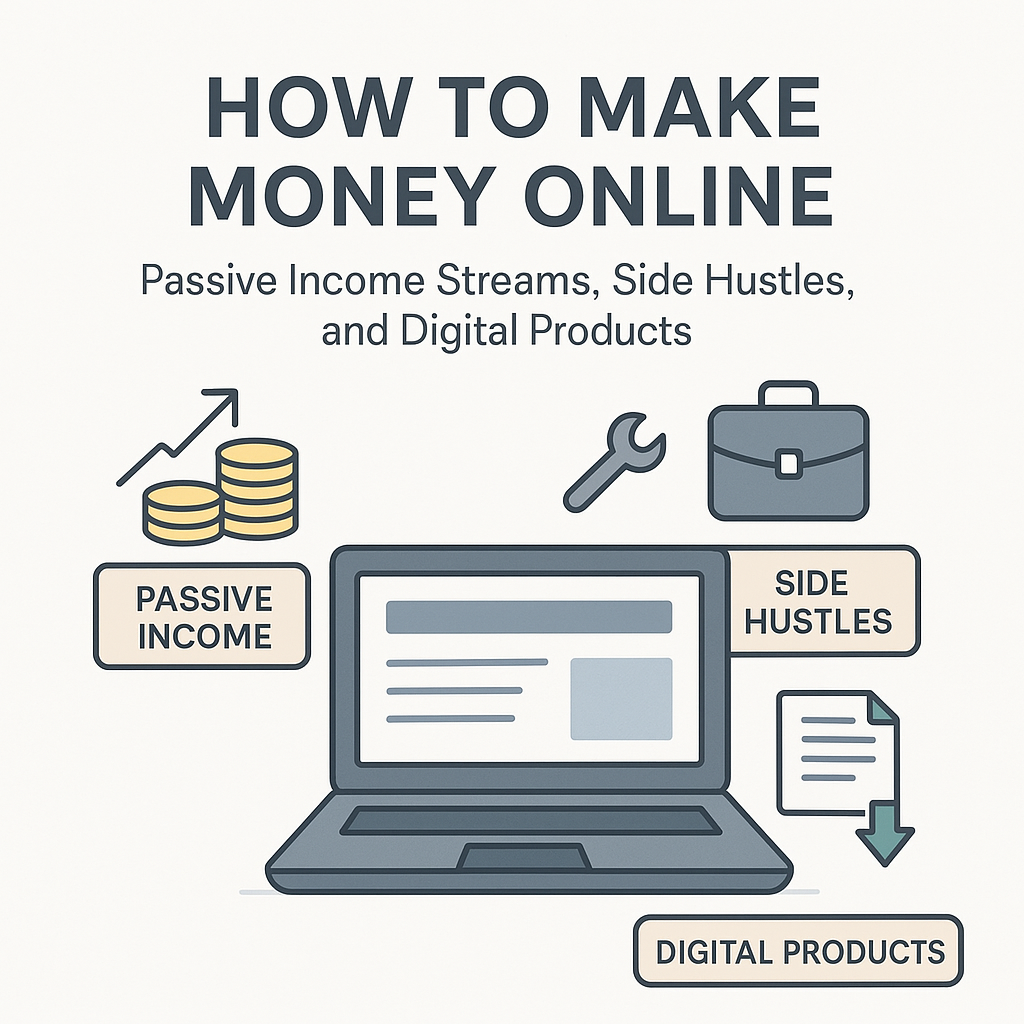
I have tested enough of these models to say this plainly: passive income is rarely passive at the start. A course needs curriculum, recordings, editing, landing pages, and customer support. An affiliate site needs research, content, SEO, and constant tuning. A productized template shop needs design, file setup, positioning, and traffic. But once the machine is built, the return on effort can improve sharply because the same asset can be sold many times. That is the attraction.
Why do people still chase it? Because the upside is real. You can build geographic freedom, diversify income, and reduce dependency on a single employer or client. You can also create time for family, service, study, or a second venture. Used properly, that is good stewardship. Used badly, it becomes greed dressed up as productivity. There is a difference, and it matters.
Core benefits of making money online
- Lower startup cost: You can launch a useful offer without renting an office or buying heavy equipment.
- Flexible schedule: Online work often fits around a job, school, or family obligations.
- Multiple revenue streams: You can combine ads, affiliates, digital products, services, and subscriptions.
- Scalability: A course or template can be sold 10 times or 10,000 times with limited extra labor.
- Better margins: Digital goods usually have low delivery costs.
- Location freedom: A laptop and internet connection are often enough.
- Skill compounding: Writing, selling, analytics, and product creation all improve with use.
- Resilience: If one income source weakens, others can carry the load.
The contrarian view is this: online income is not automatically better than offline income. Some online paths are crowded, low-trust, and annoying. The average affiliate site is a graveyard. The average course never sells. The average dropshipping store burns cash. The benefit is not that money online is easier. The benefit is that strong systems can produce more leverage than physical work alone.
There is also an ethical angle that gets ignored. Digital business can either respect human dignity or try to manipulate it. Spam, fake scarcity, scammy funnels, and junk products are profitable in the short run. They are also corrosive. A serious business owner should care about justice, fairness, and usefulness, not just conversion rates. That may sound old-fashioned. Good. Old-fashioned standards tend to survive.
Here is a practical comparison of the main path versus its biggest competitor:
| Model | Best For | Startup Cost | Time to Revenue | Scalability | Risk | Notes |
|---|
| Making money online through digital assets | Long-term income, leverage, recurring sales | Low to medium | Medium to long | High | Medium | Best when you build content, products, or systems |
| Traditional hourly side jobs | Quick cash, simple execution | Very low | Fast | Low | Low to medium | Easier to start, harder to scale |
Step-by-step guide to building online income
- Pick a market with pain.
Do not start with your interests alone. Start with a problem people already pay to solve. That may be job prep, fitness, design, exam review, budgeting, writing, coding, or small-business operations. The market must have urgency, repeat demand, and a clear buyer. If no one is spending money, your “passion” is just a hobby.
- Choose one business model first.
Do not bolt together six income ideas on day one. Pick one lane: freelance service, affiliate content, digital product, online course, newsletter sponsorships, or e-commerce. I have seen too many beginners waste months dabbling. Focus beats novelty. You can expand later.
- Build a small offer.
A small offer is easier to sell than a giant promise. A checklist, template, workshop, consultation, or mini-course can validate demand. Once people buy, you have evidence. Without sales, you have opinions. Opinions do not pay rent.
- Set up distribution.
Traffic matters. A lot. Use SEO, short-form video, email, partnerships, or marketplaces. If you want a reliable source on content marketing and discoverability, Google’s helpful content guidance is a good technical reference. Your goal is not to be everywhere. Your goal is to be where buyers already look.
- Add automation.
Automation is not laziness. It is leverage. Use email sequences, payment processing, scheduling tools, FAQ pages, and delivery systems. This is where passive income starts to look less like fantasy and more like engineering. If the process breaks every time a sale comes in, you do not have a business yet. You have a chore.
- Track ROI.
Measure what works. Watch traffic, conversion rate, average order value, and refund rate. If you cannot measure the machine, you cannot improve it. Frankly, many creators avoid numbers because numbers tell the truth.
- Improve the offer.
Tighten the promise. Reduce friction. Add proof. Raise quality. Honest iteration wins. A better product beats a louder one over time.
- Build a second stream only after the first works.
This is where people usually get greedy. They chase a second income idea before the first one has traction. Bad move. Build one engine first. Then add another. That is how you get durable revenue streams instead of a mess of half-finished accounts.
Helpful sources for practical online business structure include HubSpot’s business resources and SCORE’s startup guides. They are not glamorous, which is exactly why they are useful.

Common mistakes to avoid
The biggest mistake is buying the lie that money online should be quick and effortless. That myth sells courses, but it ruins beginners. Most side hustles fail because people want the reward before they learn the craft. The order should be reversed.
Another mistake is chasing tools instead of outcomes. A new website builder, a fancier camera, or some shiny AI app will not fix a weak offer. Tools help once the model is sound. Before that, they are just expensive procrastination.
A third mistake is ignoring trust. People buy from sources they believe. If your content is sloppy, dishonest, or bloated with hype, your conversion rate will show it. You can also damage your reputation faster online than offline because screenshots last forever. That is the part many people forget.
A fourth mistake is trying to be everywhere at once. One person cannot manage YouTube, Instagram, LinkedIn, a blog, a podcast, an email list, a store, and three affiliate sites from scratch without dropping quality. Pick a channel, get competent, then expand.
A fifth mistake is treating passive income like a lottery ticket. Real assets need maintenance. Courses need updates. Blogs need fresh content. Products need support. Software needs bug fixes. If you do not maintain the machine, the machine rusts. Simple as that.
A sixth mistake is being careless with money and data. Use separate accounts, basic bookkeeping, and sensible contracts. Pay your taxes. Respect customer privacy. That is not bureaucratic fluff; it is part of acting like a responsible adult. Businesses should serve the common good, not just the owner’s vanity.
When I look at failed online businesses, the pattern is almost always the same: vague offer, no audience, no sales process, and a person who wanted income but not responsibility. That combination is a dead end.
Frequently asked questions
What is the easiest way to make money online?
The easiest path is usually a service you can deliver now: freelance writing, design, tutoring, editing, virtual assistance, or consulting. Easy does not mean effortless. It means you already have a useful skill or can learn one quickly, then sell it to a real buyer.
What is the best passive income stream for beginners?
For most beginners, digital products, affiliate content, and simple service-to-product conversions are the most realistic. A course, template pack, or niche newsletter can work if you have expertise and traffic. Avoid anything that promises guaranteed income. That is usually smoke.
How long does it take to make money online?
Some people earn within days through freelancing or gig work. Others take months to build content or products. The timeline depends on the model, your skill, and your consistency. Fast cash and scalable assets are different beasts.
Can you really make a full-time living online?
Yes. Plenty of people do. But they usually combine income streams, stay disciplined, and treat the work like a real business. The internet does not care about your dreams. It rewards clarity, consistency, and useful output.
Final thought: the online economy is not a shortcut around work. It is a different way to package work, distribute it, and earn from it longer. If you build something genuinely useful, keep your standards high, and respect the people who pay you, money tends to follow. Not overnight. But reliably enough to matter.