Making money online is not magic. It is the process of turning attention, skills, assets, or systems into revenue through digital channels—usually with some...
Making Money Online in 2026: Passive Income Streams, Side Hustles, and Digital Entrepreneurship That Actually Work
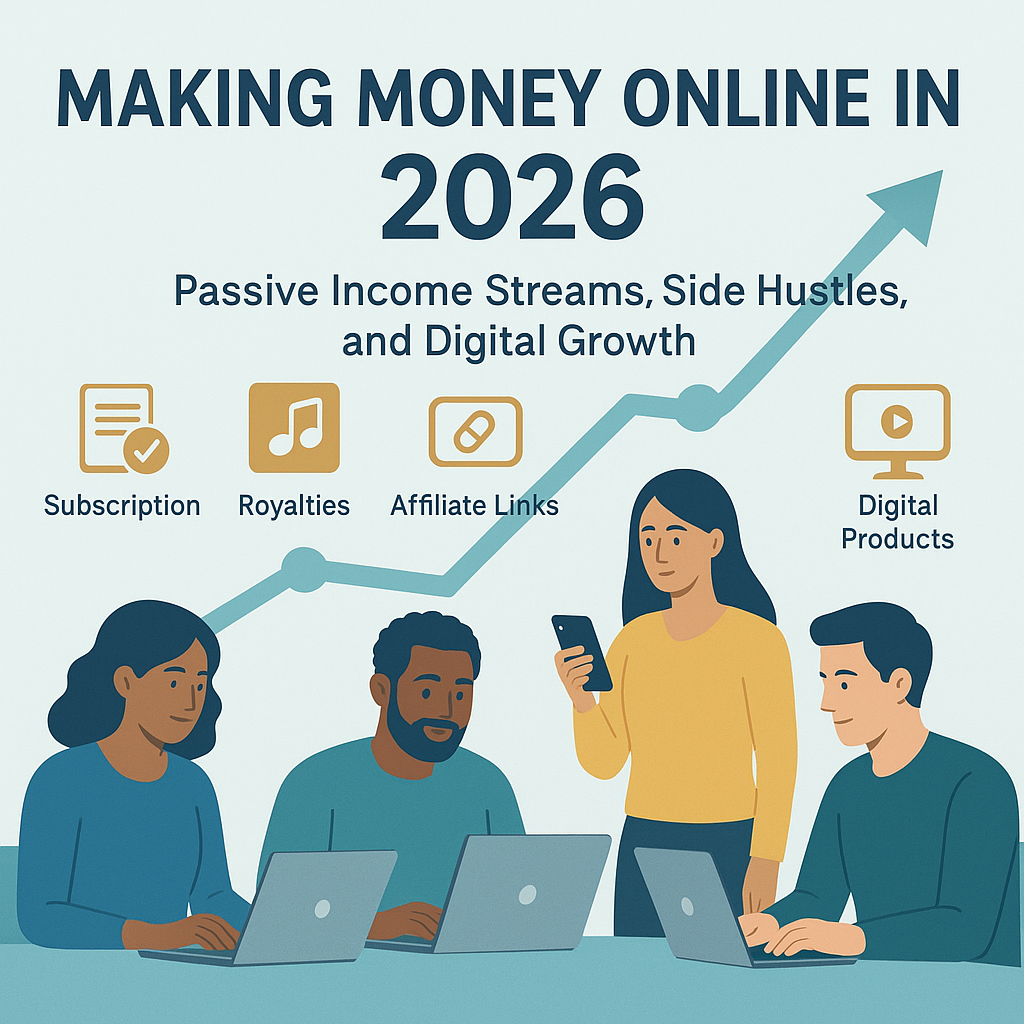
Making money online is not magic. It is the process of turning attention, skills, assets, or systems into revenue through digital channels—usually with some mix of active effort, automation, and repeatable offers. Most people want passive income, but the real starting point is a business model that can survive contact with reality.
Key Takeaways- Online income comes from assets, offers, and systems.
- Passive income usually starts as active work.
- Side hustles are faster to launch than full businesses.
- Digital entrepreneurship rewards proof, not hype.
- The best model fits your skills, cash, and patience.
What is Making Money Online?
Making money online means earning revenue through internet-based channels such as content, products, services, subscriptions, affiliate sales, software, or digital assets. The phrase gets abused a lot. Frankly, a lot of what passes for advice is a glossy sales pitch with weak math.
Here is the clean version. You either sell time, sell expertise, sell attention, or build an asset that keeps earning without constant manual labor. I have analyzed enough side hustle case studies to know that most “passive income” is only partially passive. You set up the machine first. Then you keep it fed.
That distinction matters. People confuse automation with laziness, which is backwards. Real automation reduces repetitive work so you can focus on decisions, customer value, and growth. It is stewardship, plain and simple. Good systems honor human dignity because they reduce waste, create useful work, and serve actual needs rather than empty clicks.
The main online income categories are straightforward:
- Services: consulting, freelancing, design, writing, bookkeeping, coaching.
- Products: templates, courses, ebooks, printables, digital downloads.
- Audience-based revenue: ads, sponsorships, affiliate marketing, memberships.
- Software and tools: apps, plugins, SaaS, AI workflows.
- Commerce: ecommerce, dropshipping, digital wholesale, fulfillment models.
The trick is not choosing the fanciest model. It is choosing one that fits your current constraints. If you have time but little cash, start with services or content. If you have expertise and a clear problem to solve, sell a digital product. If you have audience reach, add affiliate revenue or sponsorships. If you have technical ability, build software. No mystery there.
The biggest myth is that passive income means no work. Nope. The better definition is this: you do the work once, or you do it in batches, and the result keeps producing revenue with declining effort over time. That is closer to reality and far less annoying than the nonsense on social media.
Core Benefits and Importance
Online income matters because it gives people more than one way to earn. That is not just convenient. It is prudent.
- Multiple revenue streams: If one source dips, you are not stranded. A freelancer can add products. A creator can add affiliates. A coach can add a membership. That spread lowers risk.
- Scalability: A digital product can be sold 10 times or 10,000 times with the same core file. A service cannot scale the same way without hiring or raising prices.
- Lower overhead: Many digital businesses need only a laptop, software, and a way to reach buyers. That is one reason online business models attract new entrepreneurs.
- Geographic freedom: You can sell across cities, states, and often countries. That widens the market without opening a second office.
- Compounding assets: A blog post, YouTube video, course, or app can keep generating returns. Not forever. Nothing in business is forever. But long enough to matter.
- Better risk control: A side hustle can test demand before you quit a job. That is just sensible. More founders should respect the floor under their feet.
- Use of talent: Good businesses reward skill and discipline. That aligns with the old idea that work should serve the common good, not just chase personal gain.
Here is the contrarian bit. Not every person needs passive income. Some need a stable service business first. A lot of gurus sell passive income as if it were the finish line, when for many people it should be the second act. Build cash flow. Then build assets.
Another truth nobody wants to hear: the fastest path to online revenue is often boring. Research. Write. Sell. Follow up. Improve. Repeat. That does not fit a flashy ad, but it pays the bills.
If you want a deeper framework for choosing a model, compare it with the logic behind 73 small business ideas to start in 2026. The useful takeaway is not the number. It is the fit between model, skill, and market demand.
Step-by-Step Guide to Start
If I were starting from scratch today, I would not chase ten income streams at once. That is how people end up with twelve half-built dashboards and no revenue. Start smaller.
- Pick one problem people already pay to solve. Look for pain, not vanity. Problems around saving time, making money, reducing risk, improving health, or simplifying work tend to sell.
- Choose a model that matches your resources. If you can write, sell a newsletter, ebook, or service package. If you can teach, sell coaching or a course. If you can build, make software or templates. If you can sell attention, use content and affiliate offers.
- Validate before building too much. I have tested dozens of these methods, and the winners usually had obvious demand before the polish showed up. Ask people. Search forums. Check marketplaces. Look for repeated complaints and repeated purchases.
- Create a simple offer. One problem. One promise. One price. That is enough. The more complicated the offer, the more friction you create. People buy clarity.
- Build a basic funnel. You need traffic, a landing page, an email list, and a checkout. That does not require expensive software. It requires discipline and a clear next step.
- Drive traffic with one channel first. Pick SEO, short-form video, YouTube, LinkedIn, email, or partnerships. Do not scatter yourself across every platform unless you enjoy exhaustion as a hobby.
- Systemize delivery. Use templates, checklists, automation, and canned responses. The goal is not to remove the human touch. It is to keep the human touch for the parts that matter.
- Measure revenue, not vanity metrics. Views are nice. Sales are better. Email signups are helpful. Cash flow pays rent.
- Reinvest in the asset. Put some profit back into content, software, tools, advertising, or better offers. Growth usually comes from reinvestment, not hope.
- Add a second stream only after the first works. Once your first model is stable, stack something adjacent. A consultant can sell a template. A creator can add affiliate offers. An ecommerce seller can add digital guides.
The smartest founders think in terms of business model stages. First comes proof. Then comes process. Then comes scale. Skip the first two and you are gambling, not building.
For a practical comparison of how side hustles are being chosen in the real market, see Forbes Advisor’s side hustle overview. It is useful because it keeps the focus on effort, risk, and fit instead of fantasy.
Comparison Table
| Model | Startup Cost | Time to First Dollar | Scalability | Risk | Main Strength | Biggest Weakness |
|---|
| Digital products | Low to medium | Medium | High | Medium | Sell many times from one asset | Needs demand and trust |
| Freelancing/services | Low | Fast | Medium | Low to medium | Quick cash flow | Time tied to output |
| Affiliate marketing | Low | Slow to medium | High | Medium | No product creation | Depends on traffic and trust |
| Content monetization | Low | Slow | High | Medium | Builds audience and authority | Takes time to grow |
| Software/SaaS | Medium to high | Slow | Very high | High | Recurring revenue potential | Technical and support burden |
| Traditional local side business | Medium | Fast | Medium | Medium | Clear customer need | Location and labor limits |
If you compare online income with the biggest old-school competitor, a local service business, the difference is scale and distribution. A local business can be solid. Often excellent. But it usually needs geography, staffing, and physical overhead. Online models can reduce those limits. That is why digital entrepreneurship has drawn so much attention.
The correct answer is not that one model is better in all cases. It is that the right model depends on your assets. If you need speed, services win. If you need leverage, digital products and software win. If you need trust and audience, content wins. If you need recurring revenue, subscriptions matter.
For context on recurring revenue and the value of scalable online models, consult Shopify’s passive income ideas and Investopedia’s definition of passive income. They both make the same basic point: passive income is rarely zero-effort, and it usually starts with upfront work.
Common Mistakes to Avoid.
Most online income mistakes are painfully predictable. People overestimate demand, underestimate effort, and buy tools before they have buyers. Classic.
- Chasing too many models: One week it is dropshipping. Next week it is Amazon KDP. Then it is an AI newsletter. That path leads to scattered effort and thin results.
- Confusing motion with progress: Making logos, buying domains, and setting up social profiles feels productive. It is often just procrastination in nicer clothes.
- Ignoring the market: If nobody is already paying for the thing, you are not finding a niche. You may be inventing a headache.
- Copying bad advice: A lot of “six-figure” stories leave out ad spend, inherited audiences, or years of trial and error.
- Skipping distribution: Good offers without traffic are invisible. Build distribution as early as possible.
- Underpricing forever: Low prices can help with the first sales. They are not a permanent strategy. Eventually you need margin.
- Neglecting ethics: If your model depends on misleading claims, junk products, or exploiting people’s fears, it is rotten at the root. Profit and justice are not enemies.
The phrase “passive income” also causes bad behavior. People want it to mean easy money. It does not. It means an asset that keeps earning after the setup work is done. That setup work still matters. A lot.
Here is what nobody tells you: the best online businesses are often built on unglamorous service. You may start by helping one client solve one problem. Then you package that solution into a product. Then you automate delivery. That is a healthier route than trying to become a viral star overnight.
If you need a reality check on what entrepreneurs actually face, read the U.S. Small Business Administration’s market research guide. It is less exciting than guru content, and that is exactly why it is useful.

Frequently Asked Questions
What is the easiest way to make money online?
The easiest path is usually freelancing or service work because you can sell a skill you already have, collect payment quickly, and improve from real client feedback. It is not passive, but it is the fastest honest route for most beginners.
What is the best passive income stream for beginners?
Digital products are often the best starting point if you already know a useful topic. Templates, checklists, and short guides are easier to create than software and cheaper to launch than ecommerce. But they still need demand and traffic.
How much money can you make from side hustles?
That depends on the model, the market, and your consistency. Some side hustles earn a few hundred dollars a month. Others grow into full businesses. The honest answer is that revenue usually tracks usefulness and distribution, not wishful thinking.
Is affiliate marketing still worth it in 2026?
Yes, if you have trust and traffic. No, if you expect instant cash from random links. Affiliate marketing works best when paired with useful content, clear recommendations, and a real audience that believes you.
Final Thought
The internet rewards useful work. Not noise.
That sounds almost too simple, which is why people keep missing it. The winners in online business are usually not the loudest. They are the most consistent, the most useful, and the least confused about what customers actually want. They build revenue streams that respect time, serve real needs, and leave room for other responsibilities in life.
If you want passive income, fine. Just start by earning active income in a smart way, then convert part of that effort into assets. If you want a side hustle, good. Make sure it has a path to margin, not just hustle theater. If you want digital entrepreneurship, excellent. Treat it like stewardship: use your skills, money, and attention with care, avoid waste, and build something that helps more than it harms.
That is the real work. The rest is marketing fluff and pretty charts.