Making money online is not magic. It is a stack of revenue streams, systems, and tradeoffs, and most people get burned because they chase easy slogans instead...
Making Money Online in 2026: Passive Income Streams, Side Hustles, and Digital Entrepreneurship That Actually Pay
Making money online is not magic. It is a stack of revenue streams, systems, and tradeoffs, and most people get burned because they chase easy slogans instead of unit economics, taxes, and distribution. Most "passive income" plans are only semi-passive, and the smart money comes from owning the offer, the customer relationship, and the delivery process.
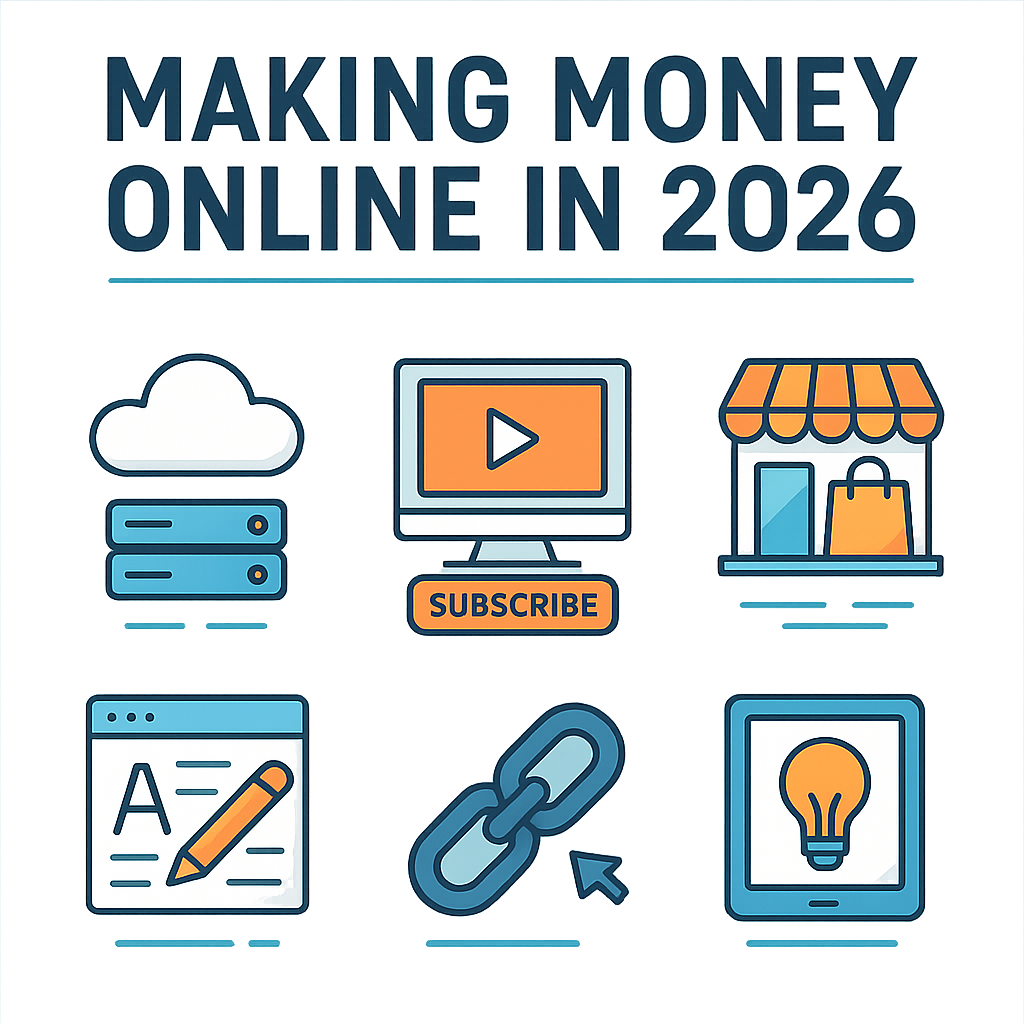
What is making money online?
Making money online means earning income through digital channels such as e-commerce, freelancing, affiliate marketing, online courses, memberships, software, or content monetization. It is not one model. It is many business models with different levels of effort, risk, and scalability.
The truth is simple: most people confuse activity with profit. Posting every day is not a business. A YouTube channel with no offer is not a business either. A real online business has a value exchange, a distribution channel, a payment system, and some way to serve customers repeatedly without reinventing the wheel each time.
I have looked at enough creator and small-business models to say this plainly: the winners usually do three things well. They solve a clear problem, they keep costs from chewing through margins, and they build a system that can run without them babysitting every step. That is what separates a side hustle from a dead-end hobby. Frankly, the boring parts are the part that pays.
Most "passive income" content online is flimsy. It sells fantasy. Real passive income streams still need setup, maintenance, customer support, and occasional cleanup when platforms change rules or ad rates fall. If you want proof, read how the U.S. Small Business Administration frames business planning and cash flow on plan your business. The boring parts matter because boring parts keep the lights on.
A useful way to think about online income is through revenue streams and ROI. One stream may bring speed, another stability, and a third scale. For example, freelancing can pay this month’s bills, while a digital course or membership may build longer-term margin. That mix is not glamorous, but it is sane.
And here is the moral bit, whether people like it or not: money made online should still respect human dignity. If your model relies on deception, fake scarcity, manipulative subscriptions, or trashing customers with hidden fees, it is bad business and bad stewardship. You can make money without becoming a charlatan. Funny how that keeps working.
Core benefits and why it matters
Online income has real advantages, but the internet does not hand out miracles.
- Low startup cost: Many digital models cost less than a brick-and-mortar business, especially if you sell services, templates, or information products. That said, low cost does not mean low effort.
- Scalability: A course, template, or software product can be sold many times without proportional labor. That is the big draw, and it is why digital products get attention.
- Geographic reach: You can sell to buyers outside your city, state, or country. This expands demand, but it also complicates taxes, chargebacks, and support.
- Flexible scheduling: Side hustles and remote offers can fit around a day job or caregiving duties. That matters for people who need income without quitting everything else.
- Diversification: Multiple streams reduce dependence on one employer, one platform, or one client. Frankly, dependence is risky.
- Automation: Payment collection, email sequences, onboarding, and delivery can be automated to varying degrees, improving margins over time.
The biggest benefit is not glamour. It is control. When you own a product or service online, you can set pricing, improve margins, and test offers faster than in traditional retail. That speed matters when market conditions shift.
Still, there is a catch. I have seen too many creators overestimate passive income and underestimate maintenance. The more automated the model, the more important the initial architecture becomes: checkout flow, customer support, refunds, tax handling, and content delivery. One weak link and the whole thing wobbles.
If you want a grounded view of business trust and consumer protection, review the FTC’s guidance at online shopping and consumer rights. It is useful because it reminds you that trust is part of the product.
Why side hustles matter: Side hustles are often the first rung. They let people test demand without gambling rent money. Good side hustles can become a service business, then a product business, then a broader brand if the operator actually learns the numbers. Bad ones become clutter.
Why passive income matters: Passive income is useful because it decouples part of your earnings from hourly labor. But let’s be real: most passive income is semi-passive at best. You do the work upfront, and then you keep it healthy with updates, marketing, and support.
Why digital entrepreneurship matters: Digital entrepreneurship lets you build an asset instead of only trading time. A decent email list, a useful course, a paid community, or a niche tool can produce recurring revenue. That is where compounding begins, if you do not sabotage it with sloppy execution.
Step-by-step guide to start making money online
Start small. Then make it real.
- Pick one problem you can solve
Do not begin with "how do I make money?" Begin with "what problem do I know how to solve?" That question is less flashy, but it works. Skills sell better when tied to a measurable outcome: getting leads, saving time, improving grades, losing weight, writing cleaner code, organizing finances, and so on.
I have tested enough offers to say the market rewards specificity. "Help small clinics get more appointments" is more useful than "digital marketing services." Clear beats vague. Every time. - Choose a model that fits your time and capital
There are four common models: services, products, audience models, and software and systems. If you need cash fast, services usually win. If you need scalability, products or software eventually outperform services. If you can build trust and attention, audience models can work. Pick based on constraints, not wishful thinking. - Validate before you build
A landing page, a simple checkout, a pre-sale, or a small ad test can tell you whether people want what you are offering. Do not spend six months creating a giant product no one asked for. That is a common form of self-sabotage. The best validation methods are ugly but effective: direct outreach, one-page offers, beta cohorts, and small paid tests. - Set up your infrastructure
You need payment processing, delivery, email capture, basic analytics, and customer support paths. If you are selling internationally, you also need to think about taxes and currency handling. That is not exciting. It is necessary. - Market consistently
Most people under-market and then claim the offer is bad. Often, the offer just did not get enough shots on goal. Email, short-form video, SEO, partnerships, and referrals all work when used with discipline. One channel is fragile. Two is better. Three is healthier. - Track the numbers
Watch conversion rate, customer acquisition cost, refund rate, churn, and average order value. If you do not know your numbers, you are guessing. And guessing is a lousy business plan. - Improve for retention, not just acquisition
The cheapest money comes from existing customers. Build better onboarding, clearer follow-up, and better support. A good customer experience is not charity. It protects margin and reputation, which is just common sense. - Keep it ethical and durable
Do not build on tricks. Use clear pricing, honest claims, and reasonable policies. The common good matters more than the quick buck. That is not saintly talk; it is survival in a world where trust compounds and scams collapse.
For online educators and creators, platform choice matters a lot. If you are building courses or memberships, compare the business plumbing first, not the social fluff. Teachable’s own materials on creator business and course sales reflect how much this layer matters. A platform that simplifies billing and compliance can save headaches later.

Comparison table: digital entrepreneurship vs. traditional side hustles
| Factor | Digital Entrepreneurship | Traditional Side Hustles |
|---|
| Startup cost | Often low to moderate | Usually low |
| Scalability | High if productized | Limited by hours or local demand |
| Revenue potential | High, with audience and systems | Moderate, usually tied to time |
| Automation | Strong potential | Limited |
| Tax complexity | Can be higher, especially international | Usually simpler |
| Asset building | Strong: audience, products, IP | Weak unless converted into a business |
| Risk | Platform dependence, compliance, churn | Physical effort, local competition |
| Best for | Creators, experts, operators | People needing fast cash or flexible work |
The bigger competitor is usually the familiar side hustle: gig work, local services, and one-off freelance tasks. Those can be useful, and I am not sneering at honest work. But they rarely create a durable asset unless you systematize them into a brand, product, or subscription model.
The key difference is ownership. A digital business can generate recurring revenue and build equity in an audience or product library. A typical side hustle often stops the moment you stop working. That is fine when you need speed. It is weak when you want compounding.
If you want a fuller view of business risk and planning, the U.S. Chamber of Commerce’s small business resources at small business strategy resources are worth a look. Not because they are sacred, but because they keep things concrete.
Common mistakes to avoid
The bad advice is everywhere.
- Chasing passive income without a product: People want income that arrives while they sleep, which is understandable, but they skip the part where the thing must actually exist. No product, no revenue. Shocking, I know.
- Selling too many things at once: Multiple offers can work later, but early on they scatter attention and dilute messaging. A tight offer is easier to market, easier to improve, and easier to fulfill.
- Ignoring taxes and compliance: This one hurts. A sale is not profit, and revenue is not take-home pay. Sales tax, VAT, income tax, processing fees, refunds, and platform fees all come off the top. If you sell across borders, the complexity rises fast.
- Renting your whole business from one platform: Relying on a single social app, marketplace, or ad channel is dangerous. Algorithm shifts can crush reach overnight. Own at least some of your distribution, especially your email list.
- Building for vanity metrics: Likes do not pay invoices. Followers do not equal buyers. Engagement is nice, but cash flow is what buys groceries. Keep your feet on the floor.
- Underpricing out of fear: Cheap pricing can attract buyers, but it can also attract bad-fit customers and crush your margin. Price based on outcomes, not insecurity.
- Treating customers like clicks: If your model depends on manipulation, hidden billing, or fake urgency, it will rot. Treat buyers with honesty. Stewardship includes how you handle other people’s money.
- Skipping the boring operational work: Support docs, refund policies, onboarding emails, and process notes are not sexy. They are what make the thing run.
Most beginner advice makes this harder than it should be. The reality is plain: simple offers, honest marketing, and steady execution beat clever nonsense. Every time.
Frequently asked questions
What is the easiest way to make money online?
The easiest method is usually a service-based side hustle, such as freelance writing, design, virtual assistance, editing, bookkeeping, or tutoring. These models are faster to launch because you are selling a skill you already have. The tradeoff is that income is usually tied to your time.
Are passive income streams really passive?
Not fully. Most passive income streams require upfront work, setup, testing, and ongoing maintenance. A course, membership, dividend portfolio, or affiliate site can become more passive over time, but none of them are maintenance-free. If someone tells you otherwise, they are selling.
How much money do you need to start a digital business?
You can start lean. Some businesses require only a domain, website, email tool, and payment processor. Others need software, design tools, or ad spend. The more important question is whether you can validate demand before spending much.
What online business model has the highest profit margin?
Digital products, software, and memberships can have high margins because delivery costs are low once created. But high margin does not mean easy money. You still need traffic, trust, support, and a product people actually want.
The internet rewards clarity, patience, and competence.
Most people want the cash without the craft, the return without the stewardship, and the freedom without the discipline, and that is why they keep bouncing between fads. Real online income comes from building something useful, pricing it honestly, and serving people well enough that they come back.
That is not flashy. Good.
If you want a durable online business, think like an owner, not a spectator. Own the offer. Own the list. Own the delivery. Respect your customers, respect your numbers, and respect the work itself. A good income stream should help you support your household, serve others fairly, and build something that does not rot the moment attention moves elsewhere.
That is the whole trick, if there is one. The rest is noise.