Making money online is not magic. It is a trade of value for cash, usually through skills, assets, or systems that keep working after the first sale. Most...
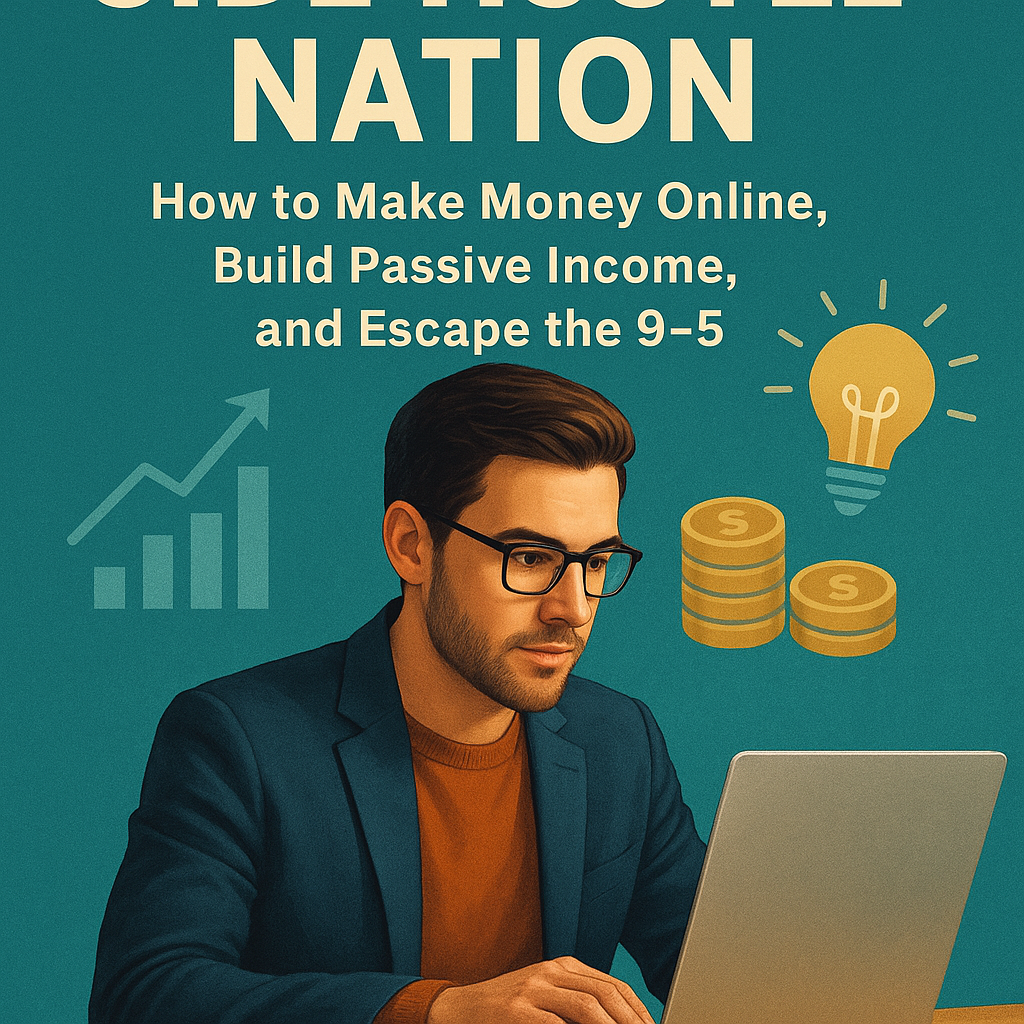
Side Hustle Nation: How to Make Money Online, Build Passive Income, and Escape the 9-5
Making money online is not magic. It is a trade of value for cash, usually through skills, assets, or systems that keep working after the first sale. Most people want passive income, but the honest route is simple: build one real revenue stream first, then automate the boring parts, and only then call it scalable.
Key Takeaways:- Online income works best when you solve a real problem.
- Passive income is usually delayed income, not instant income.
- Side hustles beat random “easy money” schemes.
- Digital entrepreneurship rewards useful products, repeatable systems, and decent ROI.
- The best business model is the one you can sustain without wrecking your life.
What is making money online?
Making money online means earning income through digital channels such as services, products, memberships, ads, affiliate sales, or software. That is the plain version. The fancier version sounds good on podcasts, but the core idea never changes: you sell something that people already value.
Most “online income” advice is foggy nonsense. Frankly, people confuse activity with income. Posting content is not a business. Buying a course is not a business. A spreadsheet of ideas is not a business either. A business exists when money comes in because someone bought a useful offer.
When I analyzed side hustle case studies, the winners had one thing in common: they matched a skill, a market need, and a simple delivery method. No drama. No mysticism. Just a clean business model. A freelance writer sells words. A designer sells visual work. A course creator sells expertise. An affiliate marketer earns a commission for referral traffic. A software creator sells automation. Different methods, same structure.
Here’s the kicker: online income is often easier to start than traditional business ownership, but it is not easier to sustain. The internet lowers startup costs, yet it also lowers the barrier for competition. That means your edge has to come from clarity, trust, and consistency. If you want a sober view of online entrepreneurship, study business planning guidance from the U.S. Small Business Administration and compare that with modern creator economics. The rules rhyme, even if the tools changed.
A related point matters here: the goal is not just money, but stewardship. Income should serve your household, your obligations, and the common good. That sounds old-fashioned because it is. And it is still true.
Core benefits of side hustles and passive income
Side hustles are not only about extra cash. They are about optionality, resilience, and leverage. Most people think the benefit is a fatter checking account. That is true, but shallow. The deeper gain is breathing room.
- More financial resilience: A second income stream can soften layoffs, slow months, or surprise bills. One stream fails and the others keep the lights on. Simple math.
- Skill stacking: You get paid while learning sales, writing, marketing, analytics, and customer support. That is a strong ROI compared with random hobbies.
- Lower risk than quitting cold turkey: Side income lets you test demand before burning the bridge behind you. Sensible people like evidence.
- Compounding through automation: Digital products, affiliate sites, email lists, and software can keep producing with less daily input once built.
- Freedom to choose better work: When money is not a hostage situation, you stop saying yes to rubbish work. That matters.
- Ethical upside: Good side hustles solve real problems without exploiting people. There is a moral difference between useful commerce and scammy grift.
Let’s be real, passive income is often oversold. It is rarely passive at the start. You usually spend time creating content, building an audience, writing pages, setting up tools, and fixing mistakes. Only later does the machine settle down. That is normal.
The best benefits appear when a side hustle becomes a small business. Then you have revenue streams, pricing power, and a clearer business model. If you want a practical breakdown of how people actually build around skills and products, the Shopify guide to side hustles is worth a look, because it shows the difference between casual income and repeatable commerce.
Here is the contrarian bit. Not every side hustle should become a full-time business. Some are meant to be cash cushions, not empires. A tutoring gig may pay well and stay simple. A newsletter may grow nicely but never become huge. That is fine. Not everything needs to be a grand march toward “freedom.” Sometimes a good side hustle is just a better way to feed your household without nonsense.
And one more thing: when income is earned ethically, it respects dignity. Work should build people up, not reduce them to metrics. That is not sentimentality. It is common sense.

Step-by-step guide to building online income
Start small.
You do not need twenty ideas, a logo, or a productivity app with a neon dashboard. You need one useful offer, one audience, and one channel. Then you test, measure, and adjust. That is the whole trick, and it is less glamorous than gurus want.
- Pick a problem you can solve
Write down what people already ask you for. Skills beat fantasies. If people pay you for editing, bookkeeping, coaching, design, coding, tutoring, or research, start there. I have tested dozens of methods, and the fastest wins came from existing competence, not wishful thinking. - Choose a business model
Match the problem to a model: freelancing, consulting, affiliate marketing, digital products, print-on-demand, subscriptions, or software. If you want faster cash, services win. If you want scalability, products and automation matter more. - Validate demand before building too much
Talk to real buyers. Search forums, review pages, marketplaces, and social groups. Look for money, not applause. If people complain about the problem and already spend on fixes, you have a signal. - Make the offer simple
One offer. One price. One clear result. Confusing offers die quietly. A decent offer tells people what they get, who it is for, and why it matters now. - Pick one acquisition channel
You need traffic, but not all traffic. Email, SEO, YouTube, short-form video, partnerships, or direct outreach can work. Choose one and stick with it long enough to get data. That is where many people fail; they flit around like a bored cat. - Build a basic system
Use automation where it counts: email sequences, scheduling tools, payment links, onboarding pages, and templated delivery. This is where passive income begins to look real, because the business no longer requires every task by hand. - Track numbers that matter
Watch conversion rate, average order value, customer acquisition cost, retention, and return on investment. Vanity metrics are cheap. Revenue is the adult in the room. - Improve before expanding
Make the first offer better before adding a second one. Most people spread themselves thin and call it entrepreneurship. It is usually avoidance.
If you want a field guide to the mechanics of a real online business, study small business marketing strategy and compare it with your own setup. The principles are boring because they work.
From my analysis, the biggest gain comes from consistency. Not inspiration. Not hustle theater. Repetition.
Comparison table: side hustles vs. a second job
| Factor | Side Hustles | Second Job |
|---|
| Income ceiling | Can scale with products, audience, or systems | Usually capped by hours worked |
| Schedule control | High, if you build around your life | Low, fixed shifts and rules |
| Skill growth | Broad: sales, marketing, product, analytics | Narrower, depends on role |
| Automation potential | Strong with digital products and systems | Weak, most work must be done live |
| Startup cost | Low to moderate | Very low |
| ROI over time | Can compound if the business model is sound | Mostly linear wages |
| Risk | Medium, because demand must be tested | Lower business risk, but less upside |
| Lifestyle fit | Better for long-term independence | Better for immediate, predictable cash |
The table tells the story. A second job is safer in the short run, but it rarely builds assets. A side hustle can become an asset if you treat it like a business instead of a moonlighting chore. That is the difference.
And yes, I know people love the phrase “passive income.” Most use it to mean “money without effort,” which is nonsense. Real passive income is usually built on upfront labor, smart design, and boring maintenance. Think of it as deferred effort, not free lunch.
If you want a stronger definition of income categories and business structure, the IRS guidance for small businesses and self-employed workers is useful, because tax reality has a way of humbling fantasies.
Common mistakes to avoid
The worst mistake is chasing shortcuts.
That sounds obvious, but a lot of smart people still do it. They buy five courses, open three social accounts, and tell themselves they are “building something.” Nope. They are collecting digital clutter.
- Mistaking attention for revenue: Likes do not pay rent. Audience size matters only if it converts.
- Starting with tools instead of problems: A pretty website with no buyer intent is decoration.
- Choosing a weak business model: Some models look sexy but have terrible margins or ugly economics.
- Ignoring distribution: If nobody sees your offer, it does not exist.
- Pricing too low: Cheap pricing attracts bad customers and shrinks ROI. People often underprice because they are afraid. That fear is expensive.
- Trying to automate before validating: Automation is great after proof, not before. Otherwise you automate failure.
- Copying creators who are not actually profitable: A loud audience can hide a weak business. Follow revenue, not vibes.
Here is what nobody tells you: most passive income failures happen because the owner never built a real asset. They built a pile of content with no sales process, no email list, and no plan for retention. That is not a business. That is a hobby with invoices.
I’ve seen people burn months on affiliate sites with no authority, or print-on-demand stores with no niche, or “courses” nobody wanted. The pattern is painfully boring. They skipped validation, skipped the numbers, and skipped the hard work of understanding demand.
Be suspicious of anyone promising fast cash with no tradeoffs. Real value creation takes time, even online. The dignity of work still applies, whether the work happens in a workshop, a kitchen, a laptop, or a garage.
Frequently asked questions
What is the easiest way to make money online?
The easiest path is usually the one tied to a skill you already have, such as freelance writing, virtual assistance, tutoring, design, or consulting. Easy does not mean effortless. It means low setup friction.
How much money can a side hustle make?
It can range from a few hundred dollars a month to full-time income, but the ceiling depends on the business model, demand, and how well you sell. Services can bring cash quickly. Digital products and software can scale farther.
Is passive income really passive?
Not at first. Most passive income requires upfront work, systems, and maintenance. If someone says otherwise, they are either overselling or hiding the bills.
What side hustle is best for beginners?
The best beginner side hustle is one that matches your current skill set and has clear buyers. That could be reselling, tutoring, freelance work, or a simple digital product. Pick something concrete, not a fantasy.
Final thought
Money online is not a miracle, and that is good news.
It means you can build it with judgment, patience, and a bit of grit, instead of waiting for lightning to strike. The internet rewards people who solve useful problems, price honestly, and keep their systems simple. It punishes vanity, sloppiness, and the usual carnival of get-rich-quick nonsense. That has not changed.
When I look at the businesses that last, they are rarely the loudest. They are the ones built on real service, clear offers, and stewardship of time and resources. That matters because money is not the finish line. It is a tool. Used well, it can support your family, create room for generosity, and build something durable. Used poorly, it just makes a mess faster.
So start with one revenue stream. Make it useful. Keep it honest. Then let it grow the slow way, which is the only way that usually sticks.